The appointment
On 1 September 2026 Jungsoo Kim became Lead Instructor for artificial intelligence at the Gyeonggi AI Digital Learning Center (경기 AI디지털배움터), responsible for the Gyeongbu zone of Gyeonggi Province: Anyang, Gwacheon, Gunpo, Uiwang, Seongnam, Suwon, Yongin, and Anseong.
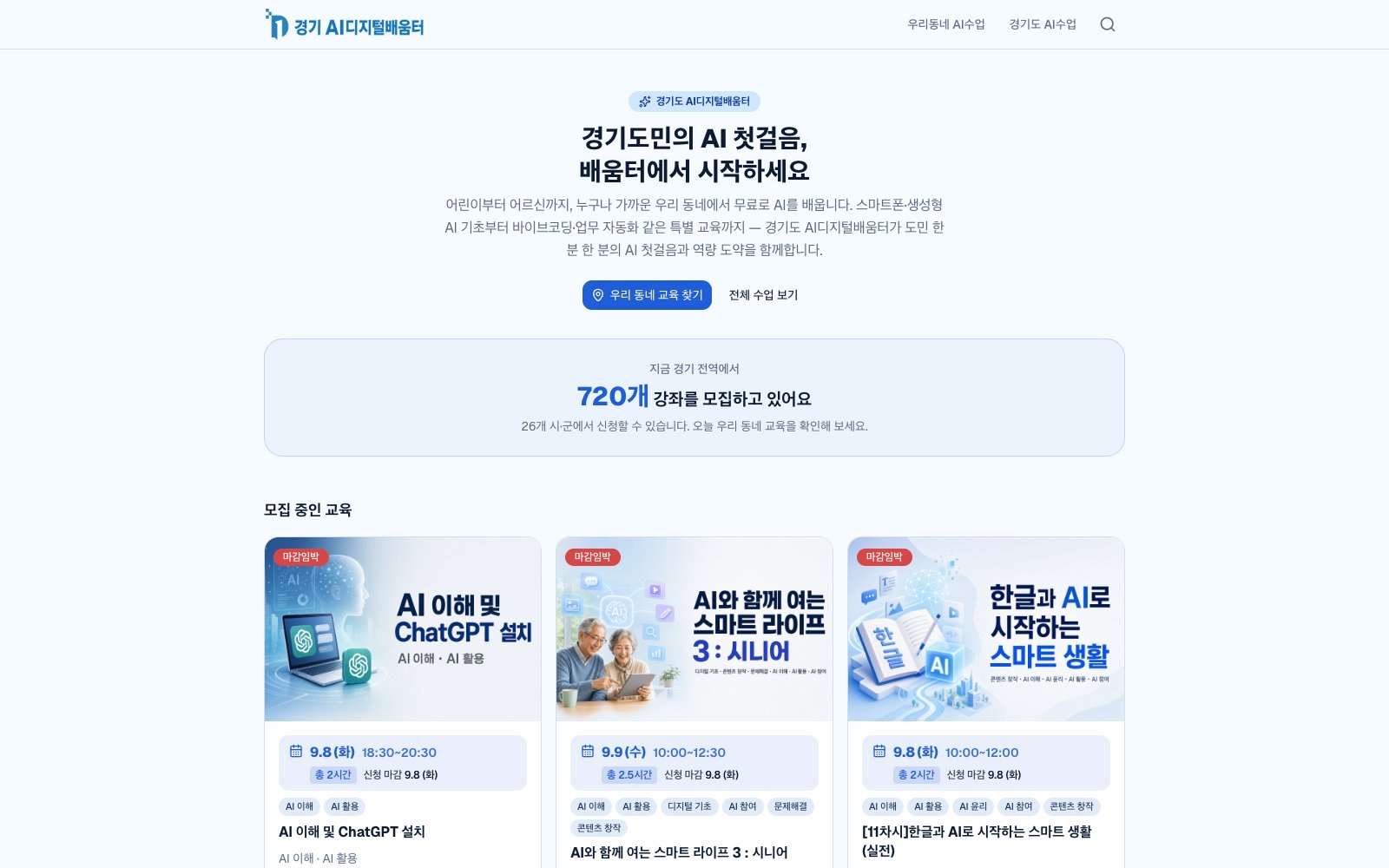
The Learning Center is a free AI education program run under Gyeonggi Province for its residents. Its stated purpose is to help residents understand artificial intelligence and use it in daily life and at work, and to close the digital divide across the province’s 31 cities and counties. Anyone can take part: children and teenagers, young adults and working people, the middle-aged and seniors, small business owners and companies. Courses are announced through the program’s site at ggedu.ai, and enrollment runs through the national Digital Learning Center platform, without membership or fees. At the start of September 2026 the site listed 720 courses open for enrollment in 26 cities and counties, taught at about 240 local venues.
What the program teaches
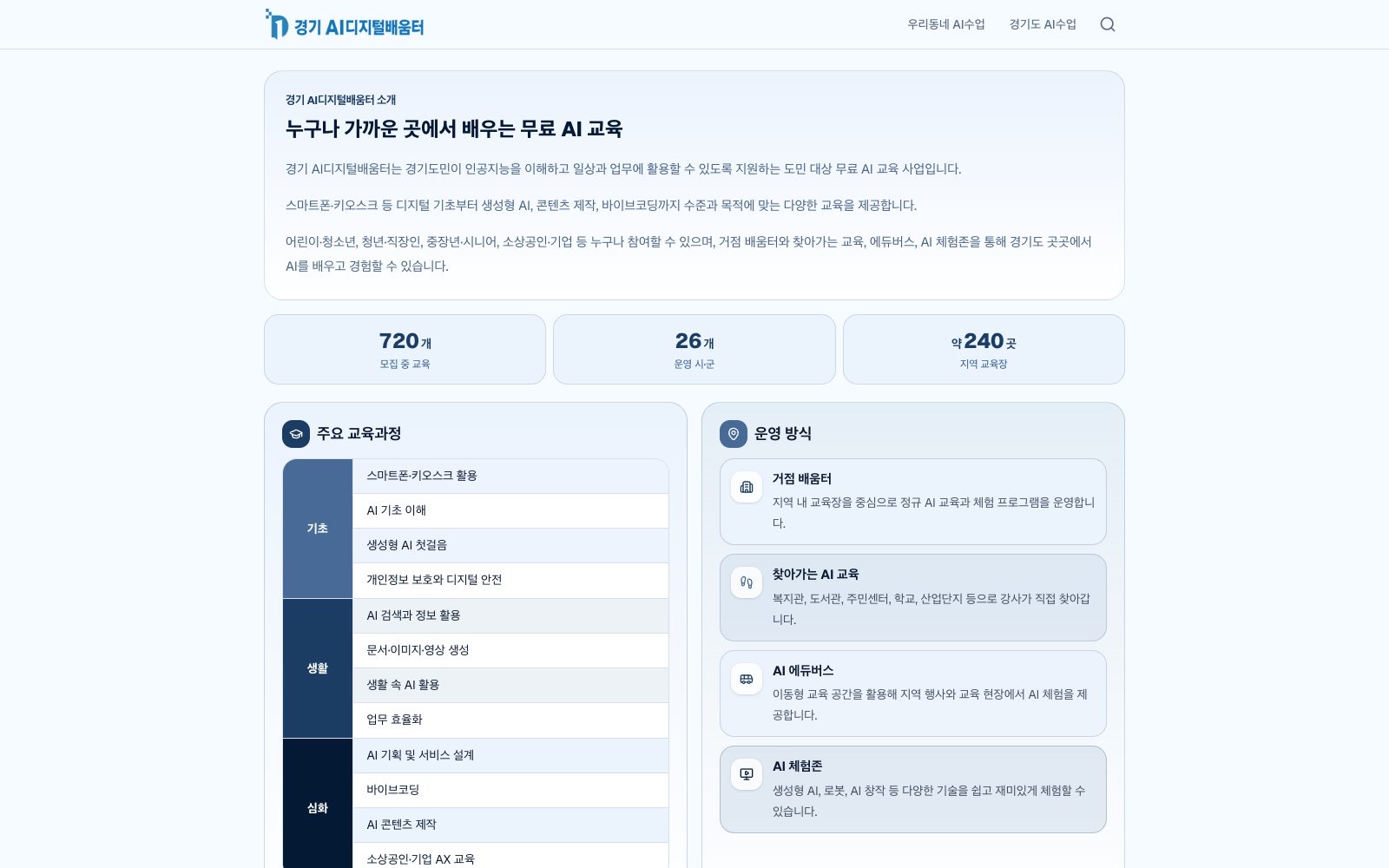
The curriculum is organized in three tiers. The basic tier covers smartphones and kiosks, a first understanding of AI, a first encounter with generative AI, and personal data protection and digital safety. The everyday tier covers AI search and information use, generating documents, images, and video, AI in daily life, and work efficiency. The advanced tier covers AI planning and service design, vibe coding, AI content production, and AI transformation training for small businesses and companies. A special track that changes monthly adds courses such as AI work automation and AI video production for people who want skills they can use in their jobs immediately.
The program is delivered in four ways. Permanent regional learning centers run regular courses and hands-on programs. Instructors travel to community welfare centers, libraries, neighborhood centers, schools, and industrial complexes. An AI education bus brings a mobile classroom to local events. AI experience zones let people try generative AI, robots, and AI creation tools.
The audience is the public
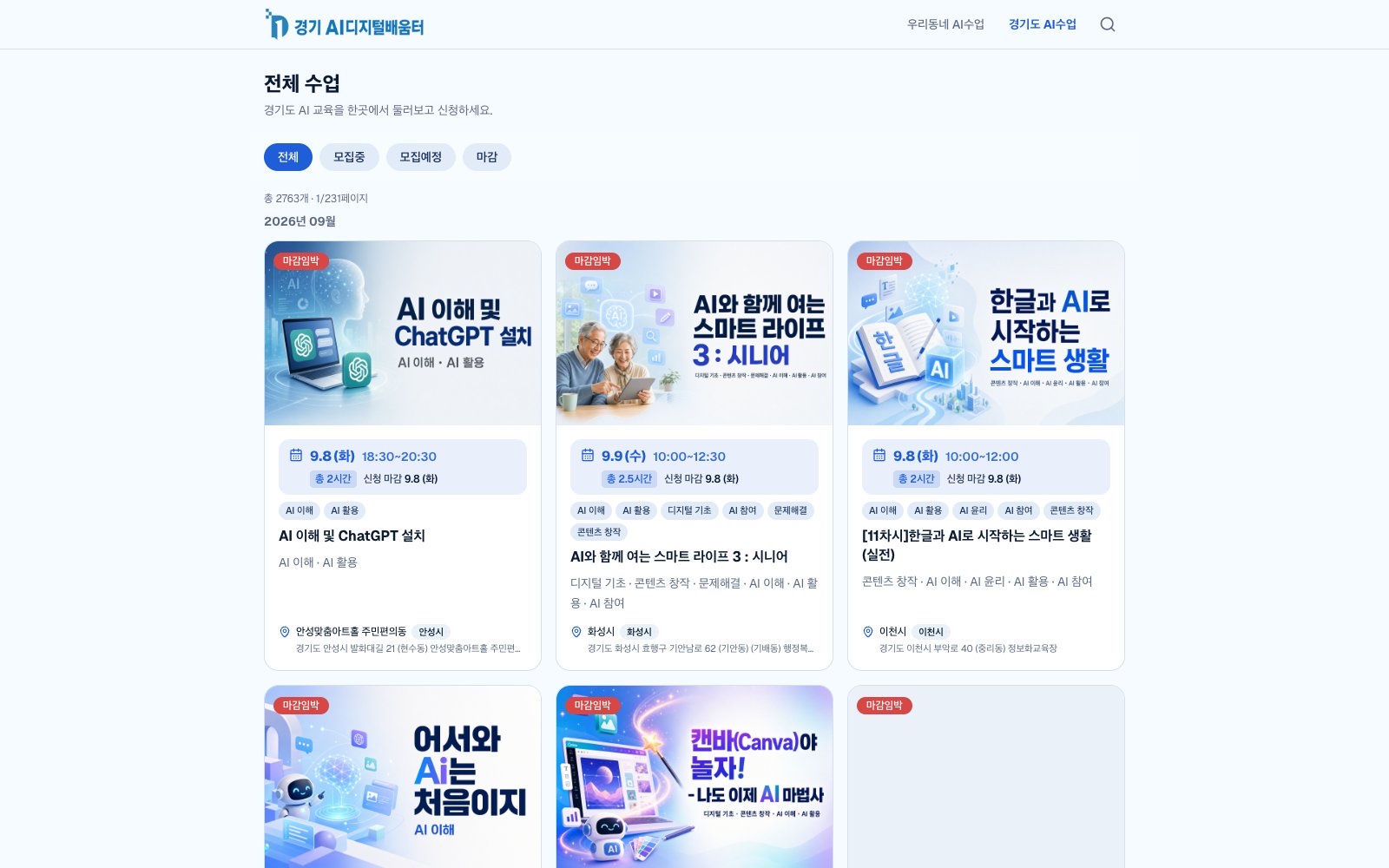
Kim has described the Learning Center in one line: the audience is the public rather than a department. A university class shares a syllabus and a level. A public class shares only the room. The same material has to be taught to whoever walks in, from a retiree meeting a chatbot for the first time to a shop owner who wants to automate the week’s paperwork.
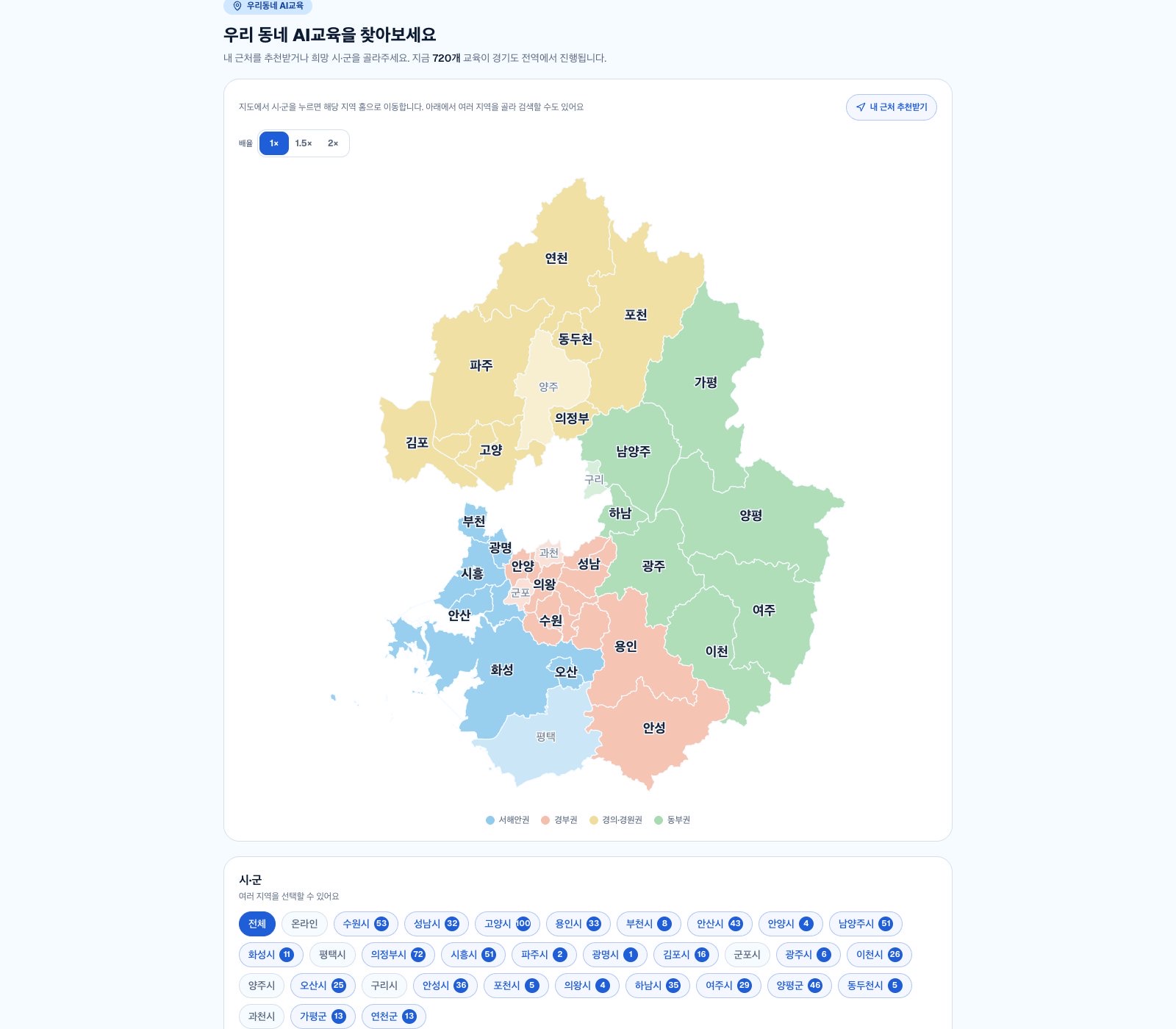
The role is a regional one. On its course map the program groups the province’s 31 cities and counties into four zones: the West Coast zone (Bucheon, Gwangmyeong, Siheung, Ansan, Hwaseong, Osan, and Pyeongtaek), the Gyeongbu zone along the Seoul–Busan corridor, the Gyeongui–Gyeongwon zone in the north (Gimpo, Goyang, Paju, Yangju, Dongducheon, Yeoncheon, Pocheon, and Uijeongbu), and the Eastern zone (Guri, Namyangju, Hanam, Gapyeong, Yangpyeong, Gwangju, Icheon, and Yeoju). Kim’s zone is the Gyeongbu zone, the eight cities of Anyang, Gwacheon, Gunpo, Uiwang, Seongnam, Suwon, Yongin, and Anseong, where he teaches the program’s artificial intelligence courses. Suwon, Seongnam, and Yongin alone had 118 courses open for enrollment at the start of September.
One occupation, several places
Building technology, teaching it, and writing about it are, for Kim, a single occupation held in several places. This autumn those places are Midwest University in Missouri, where he is Professor in the School of Business Administration for AI and Digital Transformation Strategy; Gyeonggi University of Science and Technology, where he lectures on Java programming and AI prompt design; CO M&A, where he is CTO; and now the Gyeongbu zone of Gyeonggi Province, where the classroom is wherever the residents are.