The video
On 15 September 2026 the official promotional video for the course AI Prompt Design for Problem Solving (문제해결을 위한 AI프롬프트 디자인) was released. The video was made at the request of the Department of General Education (기초교양학과) at Gyeonggi University of Science and Technology (GTEC), and the department will use it to introduce the course to students on campus and to audiences outside the university.
The course is a two-credit, practice-based general education class that Jungsoo Kim teaches at GTEC in the fall 2026 semester. It was introduced in an earlier post on this site, alongside his other course at the university, Java Programming.
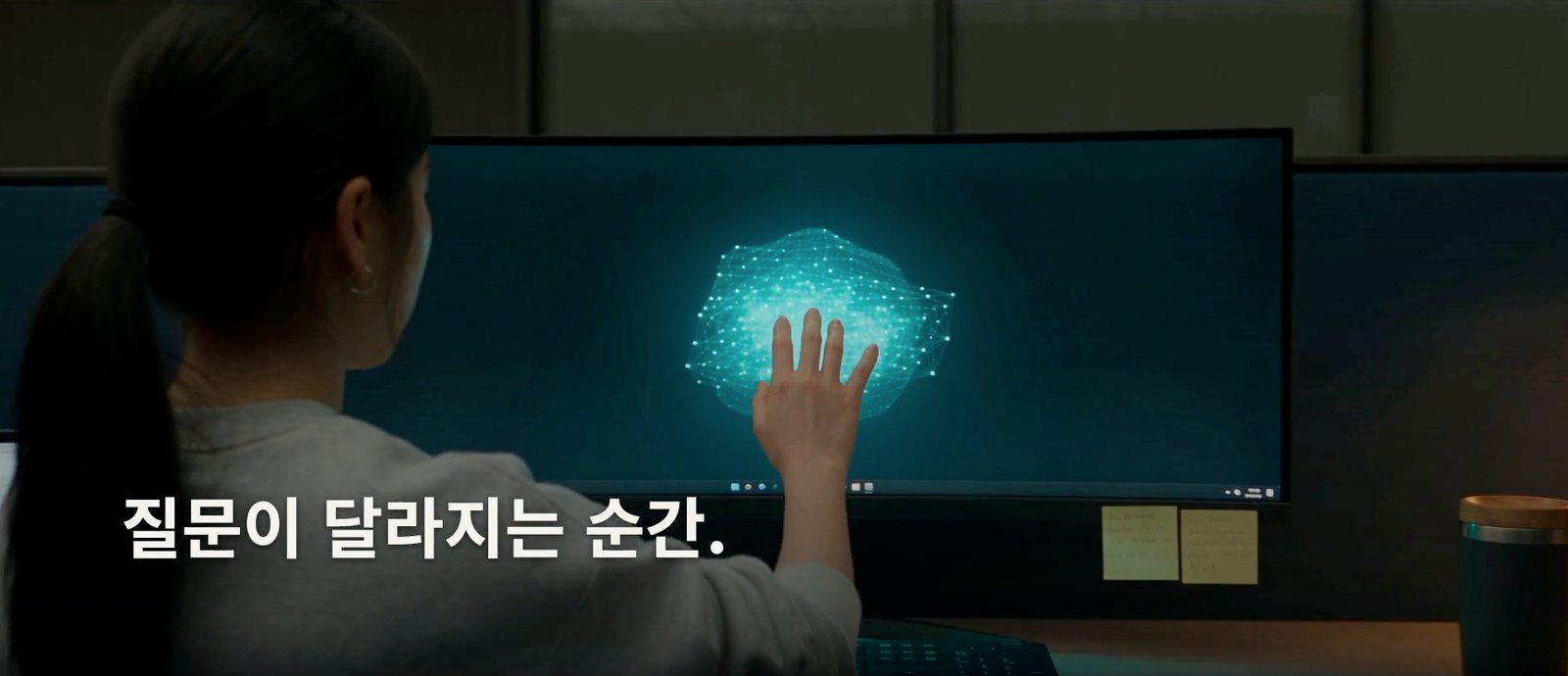
The video runs fifty-one seconds without narration, set in dark green and black with a single fluorescent green accent, and alternates typed title cards with scenes shot in the style of live footage. Its captions, in Korean, follow one student’s week: a desk piled with assignments, presentations, and ideas and the question “Where do I even begin?”, then “the moment the question changes,” as she reaches toward a sphere of light inside her monitor. From there the cards track the course itself, from defining the problem and deciding who it is for and what it is for, to analyzing and structuring it with a prompt template of her own, to “Now I can solve it myself” and “Level up your problem solving with prompt design,” before an end card carrying the university, the department, the course title, and the instructor’s name.
Where the AI is
Kim produced the video himself. The tools were ChatGPT 6, Seedance 2.5, and Higgsfield.
The method is worth stating plainly, because the course is about using AI well and the video is an example of doing so. The lecture scenes were not filmed as lectures. An empty classroom was filmed on site, and the scenes of Kim teaching in that room were generated by AI from that footage. The student who appears in the video is not a real person. She was generated by AI as well.
Nothing in the video pretends otherwise. A course that teaches students to define a problem before asking, to give an AI the context it needs, to check what comes back, and to choose the right tool for the job should be introduced by a piece of work that was made the same way, and that is open about how it was made.
The course
AI Prompt Design for Problem Solving runs for fifteen weeks. It begins with the observation that the same AI gives different people different results, and then works through the reasons: defining the real problem rather than its symptoms, writing a clear request and assigning a role, supplying background and context, specifying format and giving examples, breaking a complex task into a chain of steps, and verifying an answer that sounds confident but may be wrong. The second half applies these to everyday work: pulling what matters out of a long document, turning scattered information into one table, writing documents for different readers, building a presentation the night before, choosing among AI tools, and finally building a personal prompt template. The course closes with each student presenting one problem carried from definition to verified result.
Course materials, weekly notices, and assignments for enrolled students are published in the Lectures section of this site at /lectures/ai-prompt/. No account is needed to read or download them.
The premise of the course is the one Kim set out in his first book, Understanding AI Through Prompts: an AI’s answer never rises above the quality of the question. The video was made to bring students to that question.